Here, we will guide you through the first steps of our Online Instruction - Wing Chun Kuen.
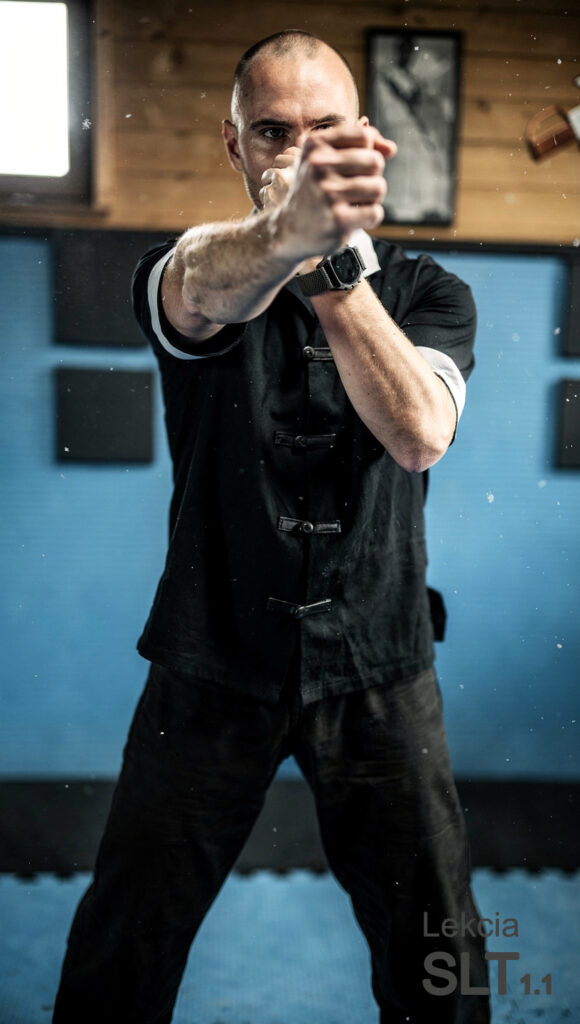
Lesson SLT 1.1
Basic and Combat Stance, stepping in motion, Lunging with chain punches and elbows—both stationary and in motion with an opponent.
Lesson 1: Structural Foundations and Explosive Attack
Welcome to the beginning of your journey. In this lesson, we will lay the foundations upon which the entire art of Wing Chun is built. Without a solid stance and correct movement, techniques are merely empty gestures. Today, you will learn how to transform your body into a stable base and a lightning-fast tool for attack.
What to expect in this lesson:
Basic and Combat Stance: You will learn how to build an unbreakable structure (Yee-Chi-Kim-Yeung-Ma). A proper stance is not static—it is a reservoir of energy ready for an immediate reaction.
Footwork and Stepping in Motion: Wing Chun and its steps. We will show you how to move so that you are ready at any moment to strike or change direction without losing your balance.
Lunging with Chain Punches: This is your first "weapon." You will learn how to channel the power of your entire body into an unrelenting stream of strikes that leaves your opponent no room to breathe.
Elbow Finish: Discover the power of short-range combat. You will learn how to transition smoothly from punches into the destructive force of the elbow, both stationary and in dynamic motion.
Sifu's Advice:
"Do not underestimate the power of the basics. Many want to fight right away, but a true master knows that the power of a strike comes from the ground. Give your maximum attention to your stance and step. When your stance is solid and your step is sure, your chain punches will have the force of a flood. In every moment with your opponent, you must feel your axis and your stability."
Training Instructions:
Stance Drill: Spend at least 20 minutes a day in each stance. Feel the tension in your legs and the relaxation in your shoulders.
Punch Coordination: During the chain punch, ensure that the fists originate from the center (central line).
Moving with an Opponent: Watch the video section featuring the sparring partner. Notice how the step and the lunge work together to keep the opponent constantly "occupied" and pressured backward.
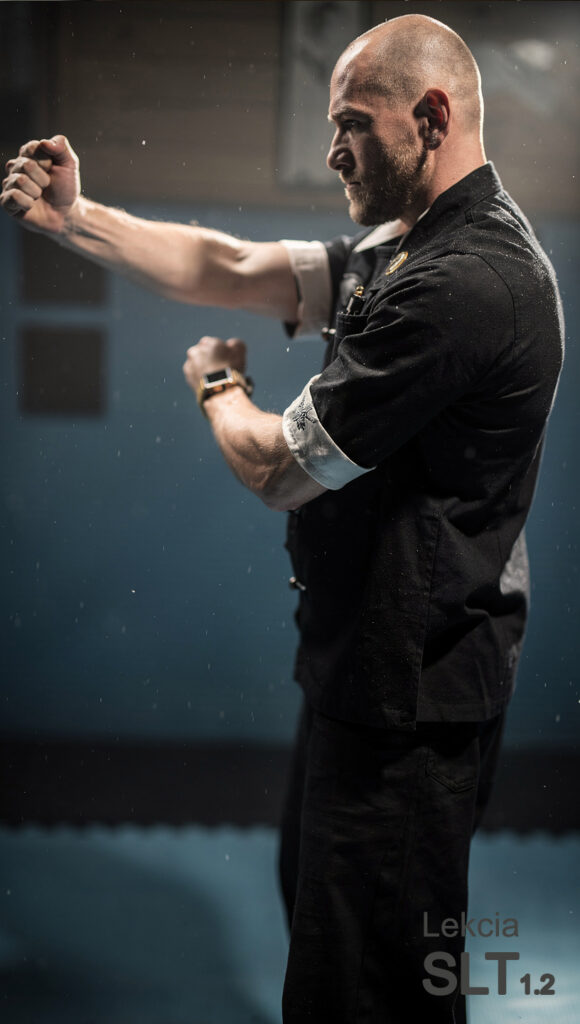
Lesson SLT 1.2
Lower Pak-Sao, Chain Punch / Lower Pak-Sao with a cross-step / Lower Pak-Sao, Elbow. Everything stationary, with a step, and in motion with an opponent.
Lesson 2: Mastering the Lower Line and Power Transfer in Motion
In the second lesson, we will focus on one of the most important pillars of Wing Chun – Lower Pak-Sao. While the first lesson focused on stability, we will now begin building the ability to eliminate an opponent's attack in the lower zone and immediately transition into a devastating counter-attack.
What to expect in this lesson:
Lower Pak-Sao and Chain Punch: You will learn how to coordinate defense with offense so that there is no time gap between them. Your defense is your attack.
Cross-step Dynamics: Lower Pak-Sao with a cross-step will teach you how to maintain your balance while advancing and how to use your entire body weight against your opponent.
Destructive Elbow Force: We will apply the principle of short-range combat. Once you open the opponent’s defense with a Lower Pak-Sao, an uncompromising elbow finish follows.
Sifu's Advice:
"Do not train these techniques only statically. Wing Chun is a living system. Start on the spot to understand the mechanics, but the core of your training must be in motion. Observe how your structure changes when you have to react to an opponent who is retreating or pushing forward. Your Pak-Sao must be solid as a rock, yet flexible as a whip."
Training Instructions:
Stationary Drill: 50x on each side (focus on the precise angle of the palm).
Stepping Drill: Sync your footwork with the strike. The punch lands exactly at the moment of impact upon stepping.
Application with an Opponent: Watch the "in motion" video section—this is the key to real combat.
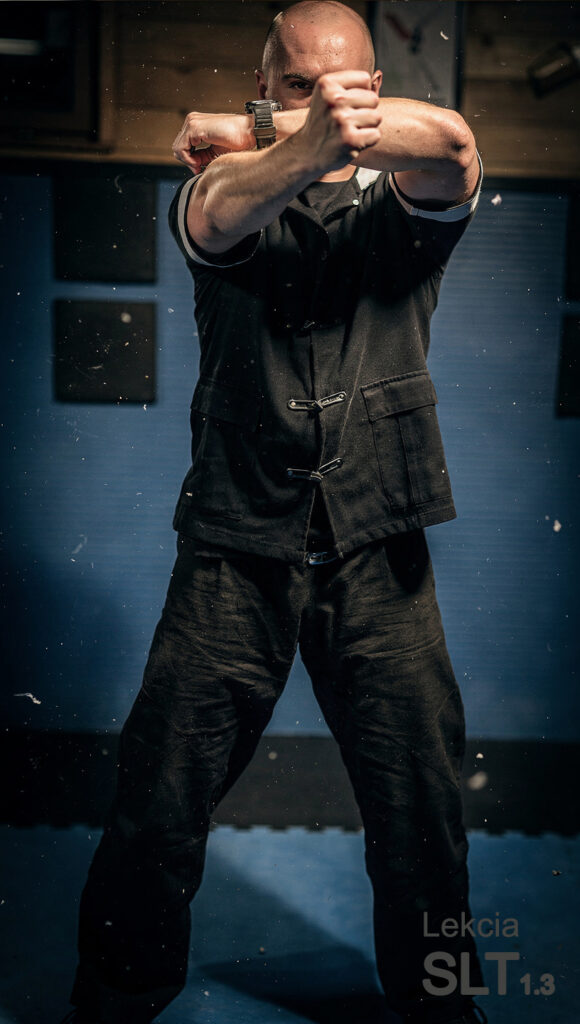
Lesson SLT 1.3
Upper Pak-Sao, Chain Punch / Upper Pak-Sao, Elbow / Everything stationary and in motion with an opponent.
Lesson 3: Offensive Lunge and Dual-Zone Control
In the third lesson, we push your training to a higher level of aggression and control. We no longer wait for the opponent's move. We learn how to use a lunge to disrupt their personal zone and how to lightning-fast switch defensive levels between the lower and upper zones.
What to expect in this lesson:
Upper Pak-Sao and Chain Punch: If the opponent raises their hands to defend, you must know how to "switch" instantly. The Upper Pak-Sao controls the opponent's forearm and clears the path for your chain punches.
Elbow Combination: We will revisit elbow destruction, but this time from an upper opening. You will see how seamlessly the elbow follows a correctly executed Upper Pak-Sao.
Sifu's Advice:
"The key to success in this lesson is the fluidity of transition. The opponent will try to confuse you by changing the height of their attack. Your hands must react as a connected system—as soon as one Pak-Sao fulfills its purpose, the other hand must already be ready to strike or control the next line. Do not remain stationary; constantly pressure the opponent with your structure."
Training Instructions:
Lunge Practice: Focus on making your forward step stable and protected by your hands.
Alternating Zones: Practice the transition from a lower Pak-Sao to an upper one without any unnecessary intermediate movements. The hand's path must be the shortest possible straight line.
Sparring Application: Pay close attention to the video with the opponent. Watch how the lunge changes the psychology of the fight—you are the one dictating the pace.
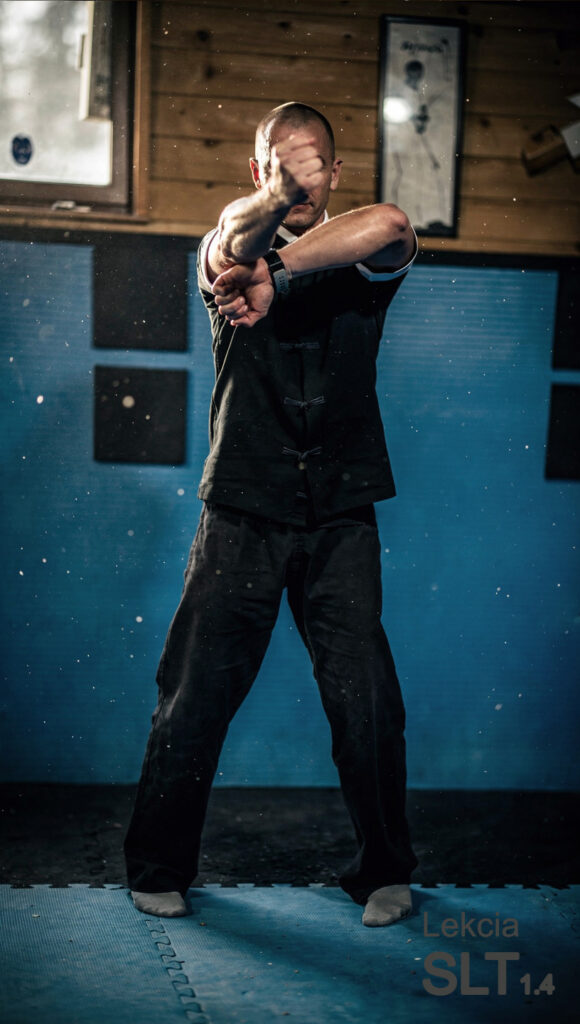
Lesson SLT 1.4
Upper Pak-Sao, Lower Pak-Sao, Chain Punch / Lunge, Lower Pak-Sao, Chain Punch / Everything stationary and in motion with an opponent.
Lesson 4: Combined Defense and Combat Fluidity
In this lesson, you will learn the most essential element for a real encounter—adaptability. An opponent won't just attack one spot. Lesson four will train you to react lightning-fast to changes in attack height and how to use combined defense to create space for an uncompromising counter-attack.
What to expect in this lesson:
Upper and Lower Pak-Sao in Series: You will learn the lightning-fast transition between defending the face and the torso. The goal is for your hands to move automatically—wherever a gap in the defense appears, that is where your Pak-Sao goes.
Transition to Chain Punch: Defense is only a means to an end. As soon as you "clear" the opponent's arm (whether high or low), immediately launch a chain punch. No waiting, no hesitation.
Offensive Lunge with Lower Line Control: We will refine your lunge so that you remain protected against unexpected low-zone attacks during your forward advance.
Sifu's Advice:
"In a fight, there is no time to think about whether an attack is coming to the head or the stomach. Your hands must be like water—adapting to the obstacle and immediately flowing past it. Focus on ensuring your lower Pak-Sao isn't too wide and your upper Pak-Sao isn't too high. Save your movement, be economical, and you will be that much faster."
Training Instructions:
Alternating Drill: Practice the sequence Upper Pak-Sao -> Lower Pak-Sao -> Chain Punch in a continuous flow. First slowly, then with maximum intensity.
Centerline Control: Constantly guard your centerline. Every movement that strays too far from the center weakens you.
Partner Dynamics: When working with a partner, focus on the element of surprise. Watch how the fluid alternation of zones completely shatters the opponent's rhythm.
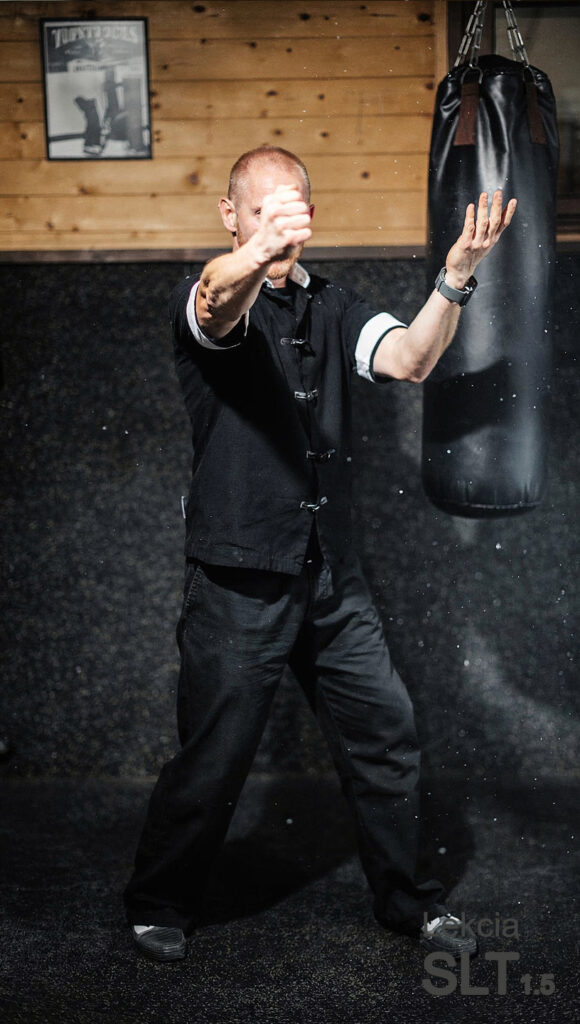
Lesson SLT 1.5
Tan-Sao, Pak-Sao, Chain Punch / Gan-Sao, Low Punch, Chain Punch, and the combination of Tan-Sao and Gan-Sao. Everything stationary and in motion with an opponent.
Lesson 5: Complete Coverage and Line Fluidity
The fifth lesson completes your basic technical arsenal for Level 1. Until now, you have primarily worked with the palm (Pak-Sao), but today we are adding Tan-Sao (dispersing hand) and Gan-Sao (splitting hand). These techniques will allow you to face even more complex attacks and ensure that your defense has no weak spots.
What to expect in this lesson:
Tan-Sao and Pak-Sao in Action: You will learn to use forearm rotation to deflect an opponent's strike without using brute force. Tan-Sao is the "gate" that leads the opponent off your axis, while Pak-Sao definitively pins them.
Gan-Sao and Low Counter-attack: You will learn to uncompromisingly eliminate attacks on the lower zone. Gan-Sao is not just a block; it is a splitting of the opponent's attack, immediately followed by your own low strike.
Tan and Gan Combination: This is the key to absolute defense. Fluidly switching between the upper (Tan) and lower (Gan) zones creates an impenetrable shield around you.
Sifu's Advice:
"Tan-Sao does not require muscle strength, but the correct angle and structure. If you push into Tan-Sao with force, the opponent will slip underneath you. However, if your elbow is in the correct position, the opponent's force will slide away like water off glass. With Gan-Sao, be decisive—you must clearly show the opponent that the path to your lower zone is closed and painful."
Training Instructions:
Feeling the Axis: With Tan-Sao, ensure your palm is facing toward your face at the correct angle and your elbow is guarding the center.
Low Counter-attack: Train the synchronization of Gan-Sao and the strike so that they land almost simultaneously.
Movement with an Opponent: During the sparring portion, observe how these techniques can be combined. Once a student understands the connection between Tan and Gan, they stop fearing the attack because they know they have an answer for every height.
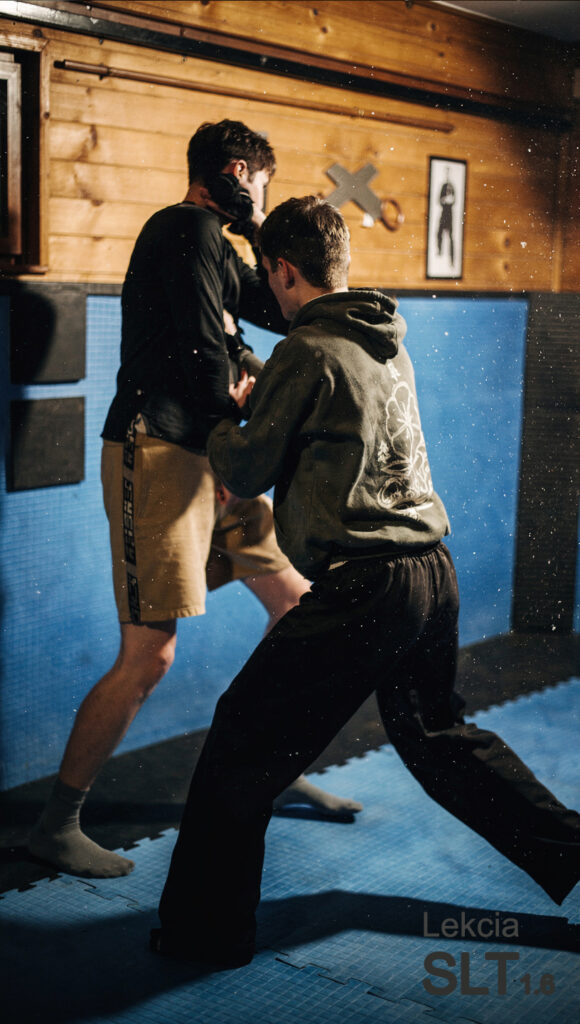
Bonus Lesson SLT 1.6
Teaching Coordinated Sparring and Combat Tactics using all techniques learned so far.
Lesson 6: Combat Tactics and Coordinated Sparring
Congratulations! You have reached the final lesson of Level 1. Until now, you have been learning individual letters and words; today, we will start putting them together into complete sentences. This lesson is not about mindless fighting, but about the intelligent use of learned techniques under pressure. This is exactly what I will require from you in your testing video.
What to expect in this lesson:
Integration of Techniques (Lessons 1–5): You will see how to fluidly transition from Pak-Sao to Tan-Sao, when to use a lunge, and when to stop an opponent with a solid Gan-Sao. Everything merges into a single flow of energy.
Distance Closing Tactics: You will learn to read your opponent. You will discover when the right moment is for an offensive lunge and how to maintain a safe structure, even when the opponent attacks in combinations.
Working with Pressure and Emotions: Sparring is not just about the hands, but about the head. We will show you how to stay relaxed, breathe, and not lose track of the centerline, even when things get tough.
Sifu's Advice:
"In sparring, the winner is not the one with the biggest muscles, but the one with better geometry and a cooler head. Your goal in these 3 minutes is not to knock out your opponent, but to show me that you understand the principles of Wing Chun. I want to see your footwork, zone control, and the ability to counter-attack instantly. Sparring is a conversation between you and your opponent—make sure that you have the last word in this conversation."
Instructions for Exam Preparation:
Freedom of Movement: Do not try to script the sparring in advance. Let your partner attack with various techniques (from the entire Level 1) and react to what is actually coming.
Power Control: Work at 50–70% power. What matters is technique, precision, and fluidity, not brute force.
Video Recording: Once you feel confident, record your 3-minute sparring session. This video will be a key part of your certificate application. Ensure that you are using elements from all five lessons throughout it.
After mastering all 6 lessons in this series, you will have the opportunity to upload your video for review.
If the Si-fu (Teacher) approves your technique, we will send you a physical certificate with a signature and watermark for completing Level 1 Online Training (Sil-Lum-Tao / Combat Applications))
and unlock access to the Level 2 lesson series.
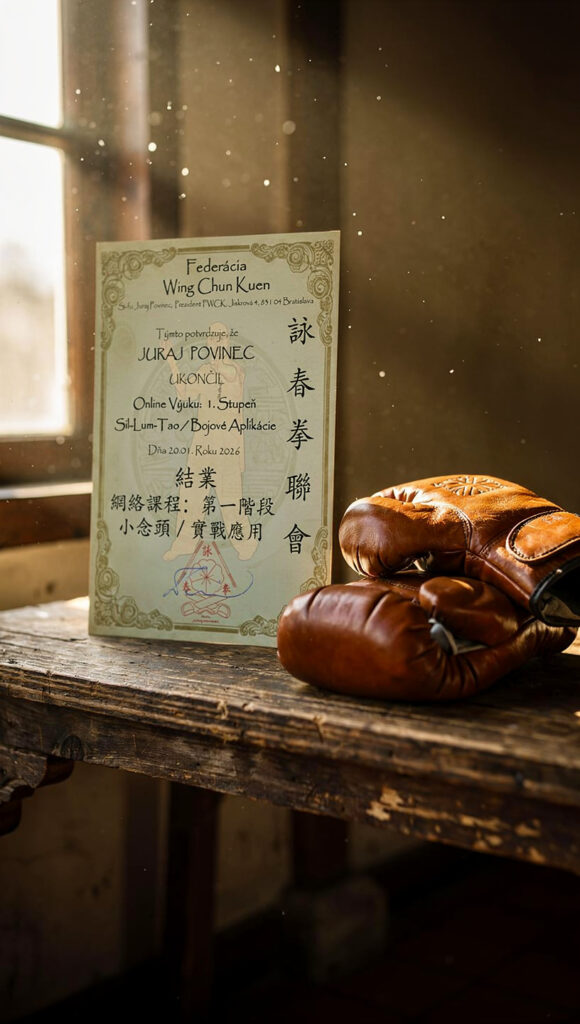
This is a sample certificate that you will receive after successfully passing the exam.
„This certificate is not just a piece of paper. It is a proof of your discipline and technical maturity, guaranteeing the quality of your Wing Chun Kuen level under the name of Si-fu (teacher) FWCK.“
"We learn online, we grow together."
At FWCK, we believe that Wing Chun is not just a set of movements, but a living tradition passed from teacher to student. That is why our online training does not end just by watching videos.
After completing the lessons, we will connect with you personally. Through WhatsApp, you will send me a video of your technique, which we will consult together. If your technique is correct, you will receive our official certificate.
More than just a certificate by mail awaits you – we will invite you to our community, to joint seminars and personal training sessions, where we can bring your technique to perfection. Become a part of the Wing Chun Kuen family today.